Cart
0

Ask a group of Australian dog owners which treat sends their dog silly, and kangaroo comes up early. Roo is lean, it smells like proper meat, and you can't find a protein much closer to home. Drive home from Robertson at dusk and you'll pass mobs of them grazing by the road.
This guide covers what kangaroo offers your dog, how much to give, what to watch for on the label, and how roo stacks up against beef liver, the other favourite in our range. If you have a dog who goes off chicken or a Labrador who could stand to lose a kilo, read on.
Are kangaroo treats good for dogs?
Yes. Kangaroo treats suit most healthy dogs. Roo is a lean red meat that is high in protein and a good source of iron and zinc. When the treat contains kangaroo and nothing else, it also makes an easy single-protein option for dogs with touchy stomachs.
Lean protein that suits most dogs
Kangaroo carries much less fat than beef or lamb. That makes it a handy treat for dogs watching their weight, older dogs who move less than they used to, and working dogs who need protein without a lot of extra fat. A Kelpie who covers twenty kilometres of paddock a day and a Cavoodle who covers twenty metres of lounge room can both enjoy the same treat.
Iron and zinc in every bite
Red meat delivers iron and zinc, and kangaroo is no exception. Your dog's complete food should cover their daily needs, so think of these minerals as a bonus that comes with the treat.
A different protein for many dogs
Most Australian dog foods lean on chicken and beef. Plenty of dogs have never eaten kangaroo, which is why vets in Australia often consider it when they want to try a protein a dog hasn't met before. If your vet has your dog on a food trial for a suspected allergy, ask before adding any treat, kangaroo included. One unplanned treat can muddy the results of a trial that runs for weeks.
Wild, not farmed
Australia doesn't farm kangaroos. Licensed shooters harvest wild kangaroos under management programs that state governments run and set quotas for. The meat comes from animals that lived on open country, eating grass and native plants. Some owners object to the harvest on welfare grounds, and that's a fair personal call. For many others, a wild native protein is the reason they choose roo.
Can dogs eat kangaroo every day?
Yes. A healthy dog can have kangaroo treats every day, as long as treats stay at about 10 per cent of their daily food. Kangaroo also appears as the main protein in many complete dog foods, so daily roo is common in Australian homes.
Watch for preservatives in raw kangaroo pet meat
The treat itself is rarely the issue. The risk sits with some raw kangaroo pet mince sold in Australia, which contains sulphite preservatives. Sulphites break down thiamine (vitamin B1), and vets have linked thiamine deficiency in dogs and cats to diets heavy in preserved pet meat. Check the label on any raw roo mince you buy. Air dried kangaroo jerky with nothing added keeps without preservatives, because drying removes the water that bacteria need to grow.
Kangaroo vs beef liver: which treat suits your dog?
Kangaroo and beef liver are two of the most popular single-ingredient treats in Australia, and they do different jobs. Roo is the lean everyday option. Liver is the rich, smelly reward you save for big moments.
| Kangaroo Jerky | Beef Liver | |
| What it is | Lean muscle meat | Organ meat |
| Nutrition strengths | High protein, low fat, iron, zinc | Vitamin A, B vitamins, iron, protein |
| Smell | Meaty | Very strong |
| Texture | Firm, chewy | Dense, snaps into small pieces |
| How often | Daily, within the 10 per cent rule | A few small pieces a day |
| Best for | Weight-watchers, chewers, dogs bored of chicken | High-value training rewards, fussy eaters |
When to choose kangaroo
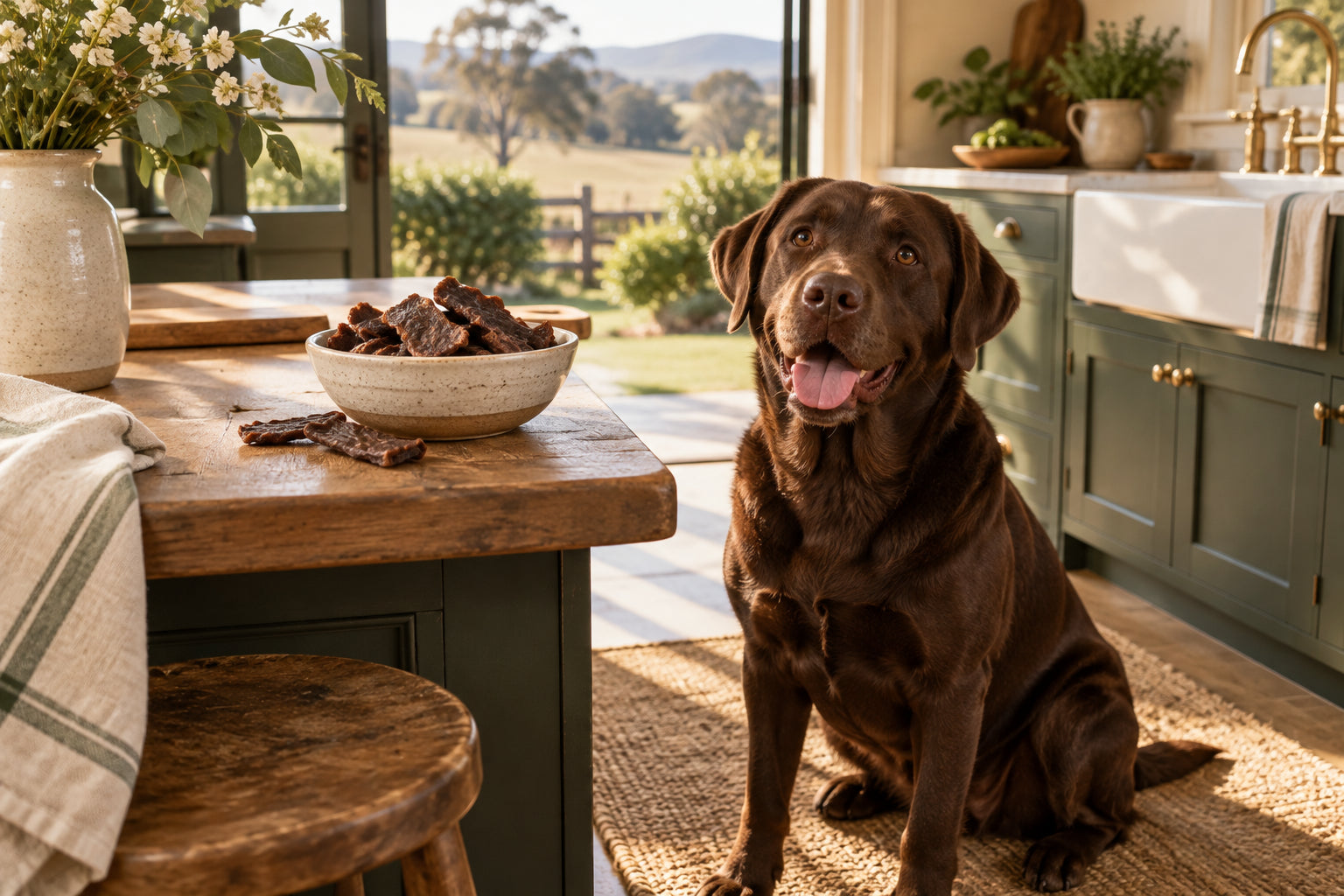
Choose Kangaroo Jerky when you want a lean treat you can hand out every day. It suits dogs on a diet, dogs who like a longer chew, and dogs who have gone off chicken. The firm texture gives a big dog something to work at for a few seconds.
When to choose beef liver
Choose Beef Liver when you need your dog's full attention. Its smell beats almost anything else at the park, so it works well for recall practice, vet visits and teaching a new trick. Liver is packed with vitamin A. Your dog needs vitamin A, but too much over time causes problems, so keep liver to a few small pieces a day and let other treats fill the gap.
Why not both?
Plenty of owners use both: roo for everyday rewards and liver for the hard stuff. Our Paddock Protein Mix puts chicken, kangaroo and beef in one 500 gram bag, so you can rotate proteins without opening three pouches. Bear calls it his favourite.
How much kangaroo can you give your dog?
Keep all treats, roo included, to about 10 per cent of your dog's daily food. In practice, the right number of pieces depends on the size of your dog and the size of the piece.
- Small dogs such as a Jack Russell or Cavoodle need only a few small pieces a day. Snap the jerky into bits the size of your fingernail.
- Medium dogs such as a Kelpie or Staffy can have a little more. Break larger strips in half.
- Large dogs such as a Labrador or German Shepherd can handle bigger pieces, but they're also the breeds most prone to weight gain. Count what you hand out.
Had a big training day? Take a little off dinner. Your vet can tell you whether your dog sits at a healthy weight and how much food they need overall.
How to choose a good kangaroo treat
The pet store wall holds kangaroo straps, rolls, cubes, ribs, tails and jerky. They aren't all the same product. Check three things before you buy.
Read the ingredient list
The best kangaroo treats list one ingredient: kangaroo. Some straps and rolls list kangaroo alongside other ingredients such as starch, glycerine or flavours. Those treats aren't harmful in small amounts, but you lose the single-protein benefit.
Check for preservatives
Dried kangaroo keeps without added preservatives. If you see a preservative on the label, ask yourself why it's there.
Match the texture to your dog
Jerky and straps suit most dogs. Kangaroo ribs and tails contain bone, so supervise your dog every time, pick a size that suits their mouth, and skip them for dogs who gulp. Tiny dogs and seniors with worn teeth do best with jerky snapped small.
Is kangaroo safe for puppies and senior dogs?
Kangaroo jerky suits puppies and senior dogs when you adjust the piece size. Puppies can enjoy small pieces from when they come home. The firm texture is easier once their adult teeth come through at around six months, so snap it small before then. Our guide to puppy training treats covers daily limits and timing for young dogs.
Older dogs often do well on lean protein. If your senior struggles with firm chews, break the jerky into small bits or soften a piece in a little warm water.
Kangaroo treat FAQs
Are kangaroo treats hypoallergenic?
No treat is fully hypoallergenic, because a dog can react to any protein. Kangaroo is less likely to cause trouble for many dogs because they haven't eaten it before. If your dog has a diagnosed allergy, ask your vet before you add a new treat.
Is kangaroo jerky for people safe for dogs?
Don't share your own kangaroo jerky. Jerky made for people often contains salt, spices, garlic and onion, and garlic and onion are toxic to dogs. Buy jerky made for dogs, with kangaroo as the only ingredient.
Does Woolworths or Coles sell kangaroo dog treats?
Supermarkets and pet chains stock kangaroo straps, rolls and complete foods that contain kangaroo. Turn the pack over before you buy. Some list kangaroo as one ingredient among several, while single-ingredient treats list kangaroo alone.
What is the healthiest treat to give a dog?
The healthiest treats contain real meat with nothing added and stay within about 10 per cent of your dog's daily food. Lean options such as kangaroo suit most dogs. Fresh vegetables such as carrot also make a good low-calorie treat for many dogs.
How should I store kangaroo jerky?
Seal the pouch after each use and keep it in a cool, dry cupboard. Once opened, our jerky keeps best for one to two months. Air dried treats soak up moisture, so don't leave the pouch open on the bench on a damp day.
Try our Kangaroo Jerky
Our Kangaroo Jerky is 100 per cent Australian kangaroo, air dried with nothing added and packed in small batches in Exeter, in the Southern Highlands. It comes in a 200 gram or 500 gram pouch. For a bigger stash, the Roo & Chew Hamper bundles three packs of kangaroo. Shipping is a flat $9.99 Australia-wide, and our 30-Day Happiness Guarantee covers any treat your dog doesn't love.
Want to know how air drying compares with freeze drying? Read our guide to air dried, dehydrated and freeze dried dog treats.